Multiprotocol Label Switching Enhances Network Speed
* Question

What are the main features of MPLS?

* Answer

Multiprotocol Label Switching (MPLS) is a high-performance network technology that directs data using labels rather than network addresses, improving speed and efficiency. Here are its main features:

1. Label-Based Forwarding

  • Instead of using traditional IP routing, MPLS assigns a short, fixed-length labelto packets.
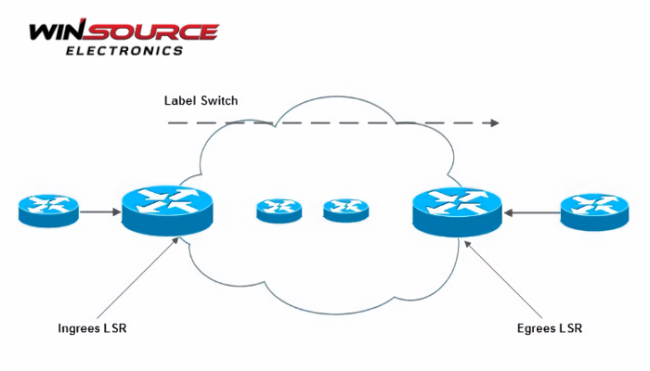
  • Routers (Label Switch Routers – LSRs) use these labels to make forwarding decisions, avoiding complex IP lookups.

2. Improved Performance and Speed

  • MPLS enables fast packet forwardingby pre-establishing Label Switched Paths (LSPs).
  • Reduces the processing load on routers, making network operations more efficient.

3. Traffic Engineering (TE)

  • MPLS allows optimized bandwidth usageby routing traffic based on network conditions.
  • Operators can define paths for different types of traffic, avoiding congestion.

4. Quality of Service (QoS) Support

  • Supports multiple traffic classes, ensuring priority for latency-sensitive applications (e.g., VoIP, video conferencing).
  • Assigns labels to different classes of service (CoS) for better performance management.

5. Multi-Protocol Support

  • Works with IP, ATM, Frame Relay, and Ethernet, allowing seamless integration into existing networks.
  • Facilitates interoperabilitybetween different networking protocols.

6. Scalability

  • MPLS is highly scalable, making it suitable for large-scale enterprise and service provider networks.
  • It supports VPNs, traffic isolation, and hierarchical routing.

7. Support for VPNs (MPLS VPN)

  • Enables secure Virtual Private Networks (VPNs)using Layer 3 MPLS VPNs (L3VPN) and Layer 2 MPLS VPNs (L2VPN).
  • Provides isolation and privacywithout requiring encryption overhead.

8. Fast Reroute and High Availability

  • MPLS supports redundancy and quick failovermechanisms (e.g., Fast Reroute – FRR).
  • In case of a link failure, traffic is rerouted almost instantly (sub-50ms recovery).

9. Layer 2 & Layer 3 Integration

  • Can function at Layer 2 (switching) and Layer 3 (routing), providing flexibility in network design.
  • Allows efficient Layer 2 transport over MPLS using MPLS-TP (Transport Profile).

10. Network Convergence

  • MPLS unifies different network types, enabling data, voice, and video traffic to be carried over the same infrastructure.
  • Facilitates converged networksfor better management and cost-effectiveness.

11. Security Enhancements

  • MPLS does not require encryption, but its segmented forwarding pathsinherently provide isolation and security.
  • Supports traffic policing and access controlfor enhanced security measures.

12. Centralized Traffic Management

  • Network operators can predefine and control traffic routesfor better predictability.
  • Used extensively in SD-WAN and SDN-based architecturesfor dynamic routing control.

Use Cases of MPLS

  • Enterprise WAN connectivity
  • Service provider core networks
  • QoS-sensitiveapplications (VoIP, video streaming)
  • Secure VPN solutionsfor businesses
  • Cloud and data center interconnects

MPLS remains a widely used technology, offering speed, efficiency, and reliability in modern networking environments.

Frequently Asked Questions

Q: What is Multiprotocol Label Switching Enhances Network Speed?
A: Find out how Multiprotocol Label Switching supports multiple traffic classes and prioritizes latency-sensitive applications effectively.
Q: Which category does Multiprotocol Label Switching Enhances Network Speed belong to?
A: Multiprotocol Label Switching Enhances Network Speed is part of our QUESTIONS & ANSWERS collection, where we cover the latest trends and technical insights.
Q: Where can I find more technical details on QUESTIONS & ANSWERS?
A: You can explore our QUESTIONS & ANSWERS section for more articles and resources related to this topic.