* Question
How does a wavelength modulated fiber sensor work?
* Answer
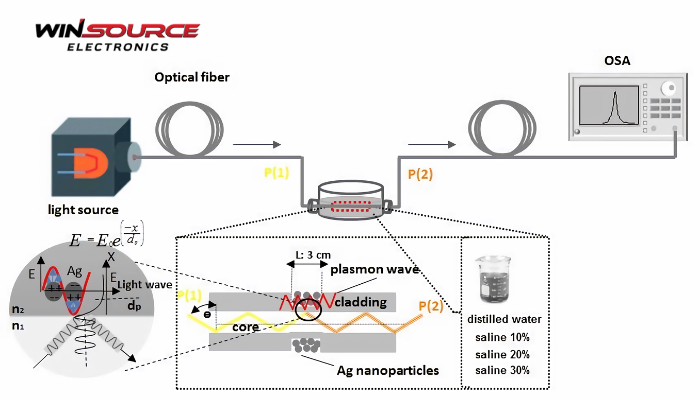
A wavelength modulated fiber sensor operates by detecting changes in the wavelength of light propagating through a fiber optic cable. These changes are induced by variations in external physical conditions such as temperature, pressure, strain, or chemical composition. Here’s an explanation of how it works:
Core Principles:
1. Light Source and Wavelength Encoding:
– A light source (e.g., a laser or LED) injects light into the fiber optic cable.
– The light interacts with a sensing element (fiber Bragg grating, Fabry-Pérot interferometer, or other optical components) designed to encode external changes into wavelength shifts.
2. Sensing Mechanism:
– External physical changes alter the optical properties of the sensing element. These changes affect:
– Refractive Index: Modifies the propagation characteristics of light.
– Physical Dimensions: Changes in length, strain, or pressure alter the path or structure of the sensing element.
– The result is a shift in the wavelength of the light reflected, transmitted, or interfered.
3. Modulation and Reflection/Transmission:
– For example, in a Fiber Bragg Grating (FBG) sensor:
– The grating reflects a specific wavelength (Bragg wavelength).
– External conditions such as strain or temperature shift the Bragg wavelength proportionally to the applied effect.
4. Detection and Processing:
– The modified wavelength is captured by a spectrometer, photodetector, or other optical analysis tools.
– By analyzing the wavelength shift, the external physical condition can be quantified.
Advantages of Wavelength Modulation:
– High Sensitivity: Small changes in wavelength correspond to fine measurements.
– Multiplexing Capability: Multiple sensors can operate on a single fiber using distinct wavelengths.
– Immunity to Power Loss: Since information is encoded in wavelength rather than intensity, it is less affected by signal degradation.
– Robustness: Resistant to electromagnetic interference and harsh environments.
Typical Applications:
– Structural Health Monitoring: Strain and stress measurement in bridges, buildings, and aircraft.
– Temperature Measurement: In environments like power plants or chemical processing facilities.
– Pressure Sensing: In pipelines or underwater.
– Chemical Sensing: Detecting specific substances via refractive index changes.
In summary, wavelength modulated fiber sensors work by converting external physical changes into precise wavelength shifts, providing reliable, sensitive, and accurate measurements for a wide range of applications.