Understanding AC Coupling: Blocking DC and Isolating AC Signals
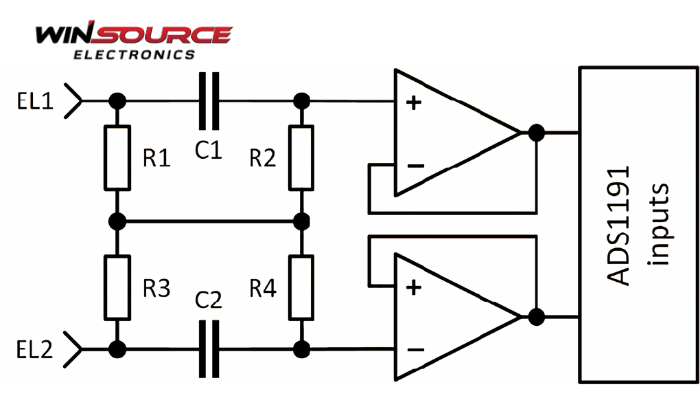
* Question

What is AC coupling?

* Answer

AC coupling refers to the method of transmitting or processing a signal in which only the alternating current (AC) component of the signal is passed, while the direct current (DC) component is blocked. This is achieved using a capacitor in the signal path. AC coupling is widely used in electronic circuits to isolate different parts of a system or to remove unwanted DC offsets.

Key Concepts:
1. DC Blocking:
– AC coupling blocks any constant (DC) component of the signal. For example, if a signal has a steady voltage offset, AC coupling ensures that only the time-varying (AC) portion of the signal is passed.

2. Capacitor as the Coupling Element:
– A capacitor is placed in series with the signal path. It allows AC signals (rapidly changing voltages) to pass through but blocks DC signals (steady voltages).

3. Applications:
– Signal Isolation: To prevent one circuit’s DC bias from affecting another.
– Audio Signals: Used in audio systems to block DC components that could damage speakers.
– Oscilloscopes: To measure the AC component of a signal without interference from DC bias.

4. High-Pass Filtering:
– AC coupling effectively creates a high-pass filter, where signals below a certain frequency (determined by the capacitor and the circuit’s impedance) are attenuated.

Example:
Imagine a signal that has a DC voltage of 5V added to an AC waveform. Without AC coupling, the waveform would oscillate around 5V, which might not be suitable for a receiving circuit. With AC coupling, the 5V DC offset is removed, leaving only the oscillating AC waveform.

Why Use AC Coupling?
– To remove unwanted DC bias or offset from a signal.
– To avoid interference between different stages of a circuit due to differing DC levels.
– To protect equipment or ensure compatibility in signal processing.

Limitations:
– AC coupling removes low-frequency components, which can distort signals that have important information in the low-frequency range.
– It may cause attenuation of signals near the cutoff frequency.

Frequently Asked Questions

Q: What is Understanding AC Coupling: Blocking DC and Isolating AC Signals?
A: Learn about AC coupling and how it can isolate different parts of a system or remove unwanted DC offsets in electronic circuits.
Q: Which category does Understanding AC Coupling: Blocking DC and Isolating AC Signals belong to?
A: Understanding AC Coupling: Blocking DC and Isolating AC Signals is part of our QUESTIONS & ANSWERS collection, where we cover the latest trends and technical insights.
Q: Where can I find more technical details on QUESTIONS & ANSWERS?
A: You can explore our QUESTIONS & ANSWERS section for more articles and resources related to this topic.